Douglas Spiraea
Spiraea douglasii
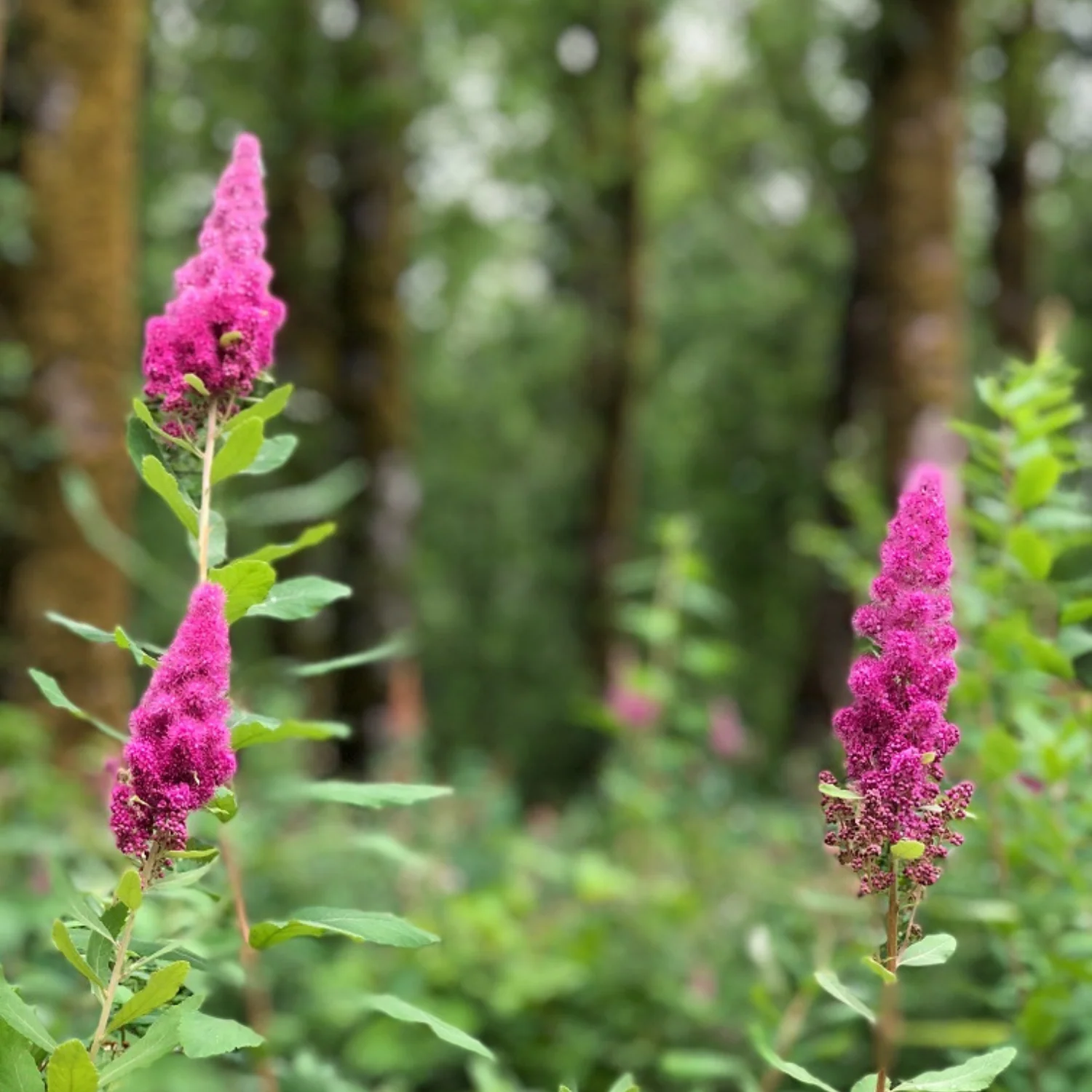
Douglas’ spiraea, or hardhack, is a large, effortless shrub that offers both high-fashion and high-function. It works beautifully in habitat hedgerows, foundation plantings and raingardens, where abundant and persistent spires of dusty pink flowers cover the tops of this shrub all summer long, creating a sea of blooms that attract bees and butterflies. By fall, the foliage relaxes into an attractive array of oranges and yellows and the flower clusters turn into seeds that are feasted on by migratory birds.
- Plant type/canopy layer: deciduous, large shrub
- Size at maturity: 2-6' tall, 3-7' wide
- Light requirements: full sun, part sun/part shade
- Moisture requirements: moist to wet soil
- Bloom time: June - September (July - August in the Portland Metro area)
- Growth rate/ease: fast growing, easy to grow
- Wildlife support: flowers attract and support adult butterflies, bees and other insect pollinators; seeds are eaten by birds and small mammals; leaves and stems are occasionally browsed by deer, though not their favorite; the overall plant attracts and supports beneficial and other pest eating insects, is a caterpillar host plant and larval food source and provides excellent habitat for birds and other wildlife, especially to water birds such as Marsh Wrens, as well as the raptors that hunt them
- Native habitat/range: common along streambanks and lake edges, in open areas of wet meadows and wetlands from southeast Alaska to northern California and eastward into Idaho and western Montana. Also found in isolated counties of Colorado, Missouri, and Tennessee. Portland Plant List - yes.
- Special features & uses: straight stems can be used for making tools; flowers are excellent in arrangements both fresh and dried; landscape uses include pollinator gardens, raingardens, hedgerows and for erosion control; drought-tolerant
Gardening with Douglas Spiraea: In the wild, you'll find thickets of Douglas spiraea, providing exceptional refugia and foraging habitat, primarily in sunny open areas that are moist to seasonally wet. That said, it is equally gorgeous and significantly less aggressive in soils that are drier. In this way, it is an ideal choice for moist to wet properties where erosion control and quick coverage are your priorities or more dry soils or smaller urban gardens/areas - such as habitat hedgerows and along foundations - where tougher conditions help keep it in check. It also serves excellently as a replacement for butterfly bush.
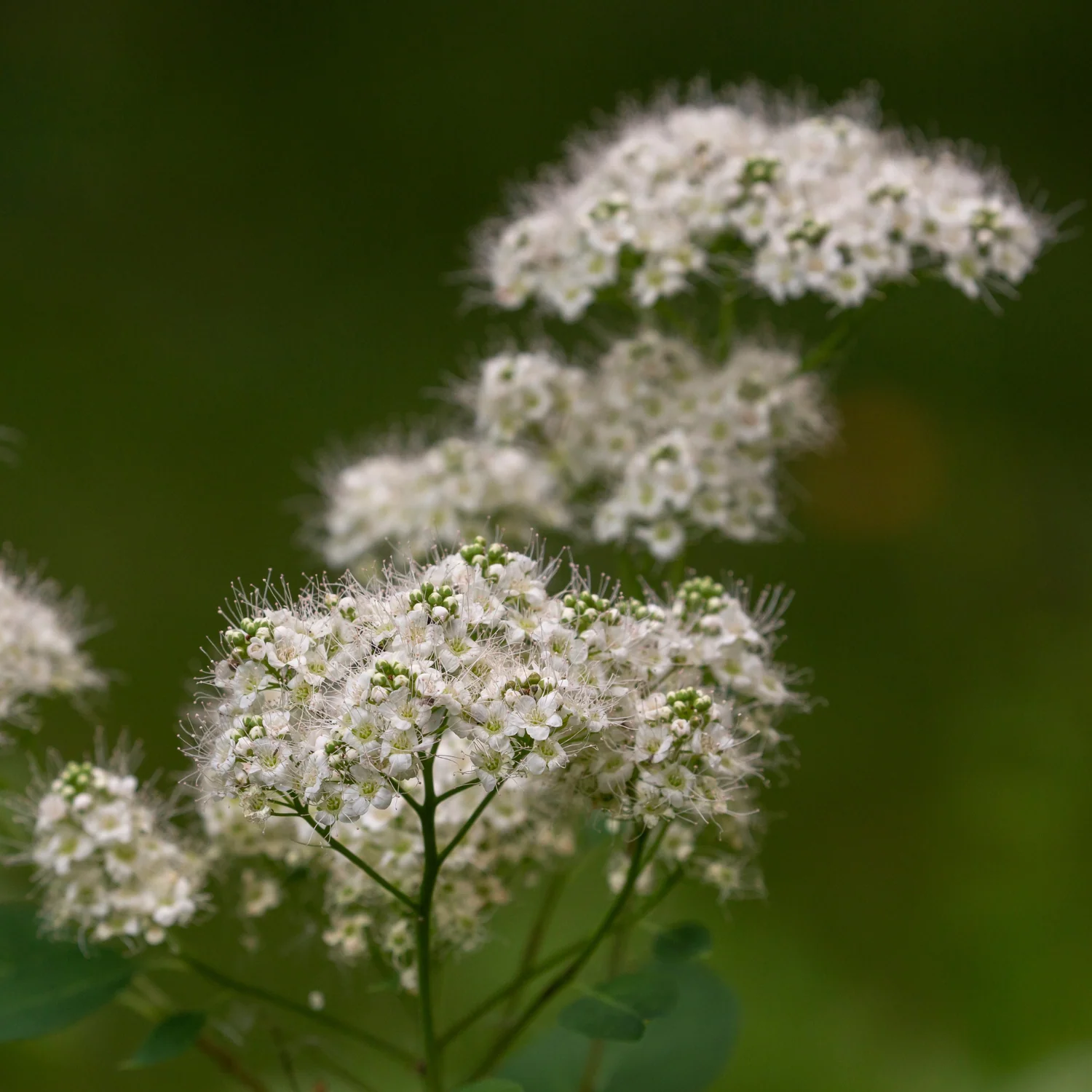
Photo Credits 1 & 4 (flowers spires) : Tara Lemezis, Tiny Seed Photography
Photo Credit 2, 8, 9 (foliage, fall look, winter look): © giantcicada, some rights reserved (CC-BY)
Photo Credit 3 (flowers, super close): © Katie McCoy, some rights reserved (CC-BY)
Photo Credit 5 (habit, in the wild): © Tyler Cannon, some rights reserved (CC-BY)
Photo Credit 6 (seed heads, close): Karli Del Biondo, Beetles and Bees
Photo Credit 7 (seed heads, distant): © Justin Flint, some rights reserved (CC-BY)
Product Information
Product Information
Shipping & Returns
Shipping & Returns
Description
Spiraea douglasii
Douglas’ spiraea, or hardhack, is a large, effortless shrub that offers both high-fashion and high-function. It works beautifully in habitat hedgerows, foundation plantings and raingardens, where abundant and persistent spires of dusty pink flowers cover the tops of this shrub all summer long, creating a sea of blooms that attract bees and butterflies. By fall, the foliage relaxes into an attractive array of oranges and yellows and the flower clusters turn into seeds that are feasted on by migratory birds.
- Plant type/canopy layer: deciduous, large shrub
- Size at maturity: 2-6' tall, 3-7' wide
- Light requirements: full sun, part sun/part shade
- Moisture requirements: moist to wet soil
- Bloom time: June - September (July - August in the Portland Metro area)
- Growth rate/ease: fast growing, easy to grow
- Wildlife support: flowers attract and support adult butterflies, bees and other insect pollinators; seeds are eaten by birds and small mammals; leaves and stems are occasionally browsed by deer, though not their favorite; the overall plant attracts and supports beneficial and other pest eating insects, is a caterpillar host plant and larval food source and provides excellent habitat for birds and other wildlife, especially to water birds such as Marsh Wrens, as well as the raptors that hunt them
- Native habitat/range: common along streambanks and lake edges, in open areas of wet meadows and wetlands from southeast Alaska to northern California and eastward into Idaho and western Montana. Also found in isolated counties of Colorado, Missouri, and Tennessee. Portland Plant List - yes.
- Special features & uses: straight stems can be used for making tools; flowers are excellent in arrangements both fresh and dried; landscape uses include pollinator gardens, raingardens, hedgerows and for erosion control; drought-tolerant
Gardening with Douglas Spiraea: In the wild, you'll find thickets of Douglas spiraea, providing exceptional refugia and foraging habitat, primarily in sunny open areas that are moist to seasonally wet. That said, it is equally gorgeous and significantly less aggressive in soils that are drier. In this way, it is an ideal choice for moist to wet properties where erosion control and quick coverage are your priorities or more dry soils or smaller urban gardens/areas - such as habitat hedgerows and along foundations - where tougher conditions help keep it in check. It also serves excellently as a replacement for butterfly bush.
Photo Credits 1 & 4 (flowers spires) : Tara Lemezis, Tiny Seed Photography
Photo Credit 2, 8, 9 (foliage, fall look, winter look): © giantcicada, some rights reserved (CC-BY)
Photo Credit 3 (flowers, super close): © Katie McCoy, some rights reserved (CC-BY)
Photo Credit 5 (habit, in the wild): © Tyler Cannon, some rights reserved (CC-BY)
Photo Credit 6 (seed heads, close): Karli Del Biondo, Beetles and Bees
Photo Credit 7 (seed heads, distant): © Justin Flint, some rights reserved (CC-BY)