Tall Western Meadowrue
*PACKAGING NOTE: This lil plant is part of an exciting trial series using CowPots! CowPots are the only biodegradable pot made from 100% renewable and recycled cow manure. CowPots are 100% plastic & peat free, made on an American dairy farm using solar energy, and can be planted right in the ground.
Thalictrum polycarpum
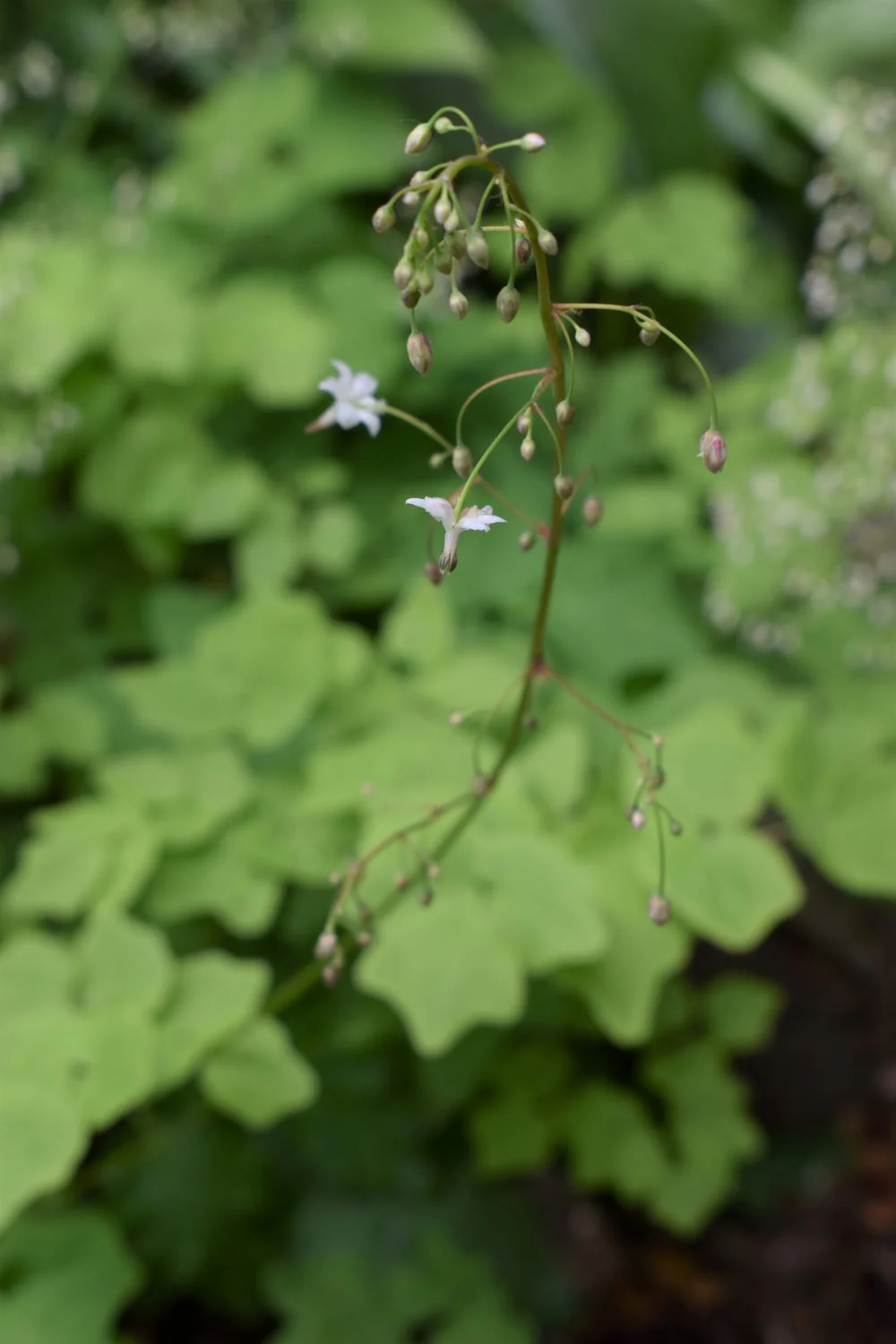
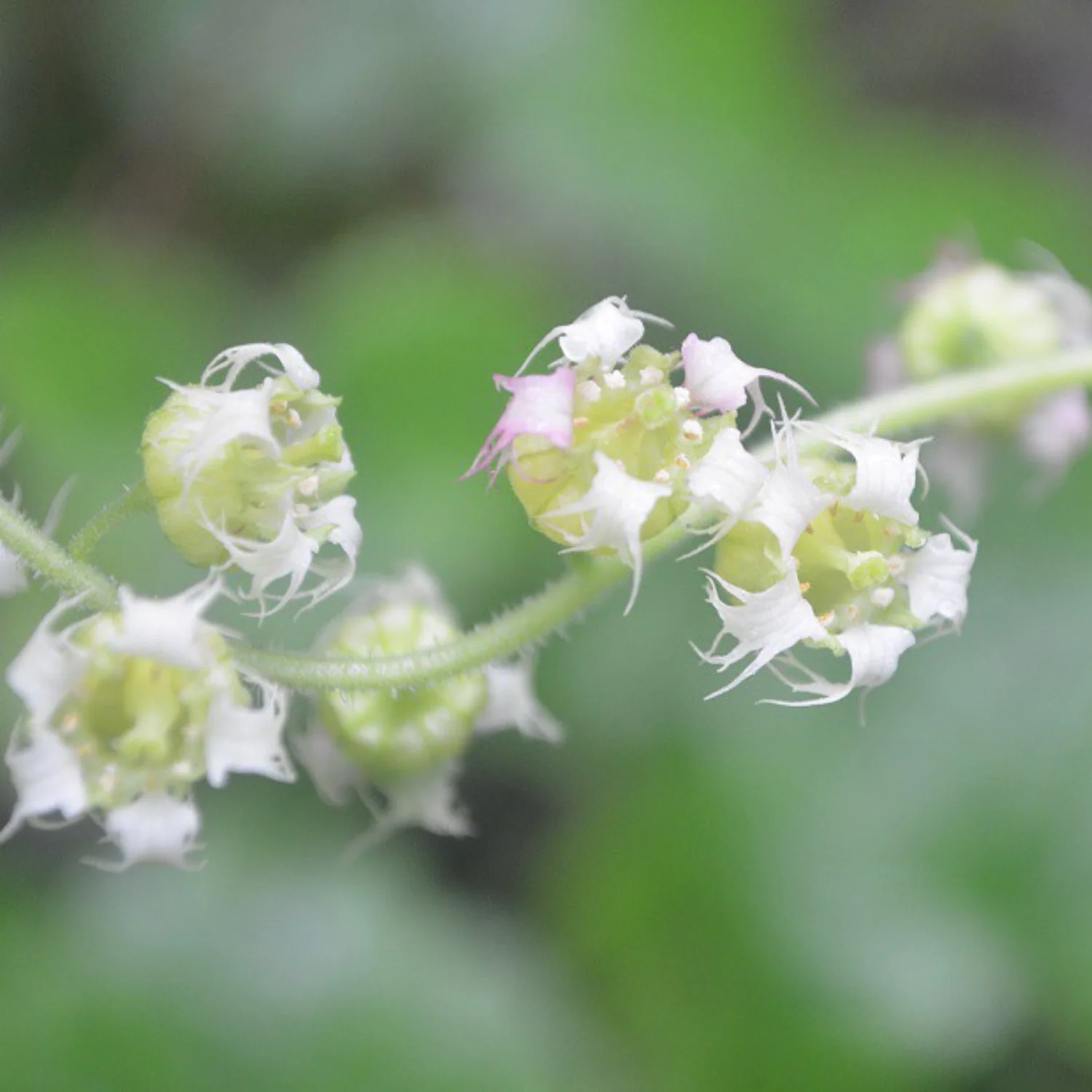
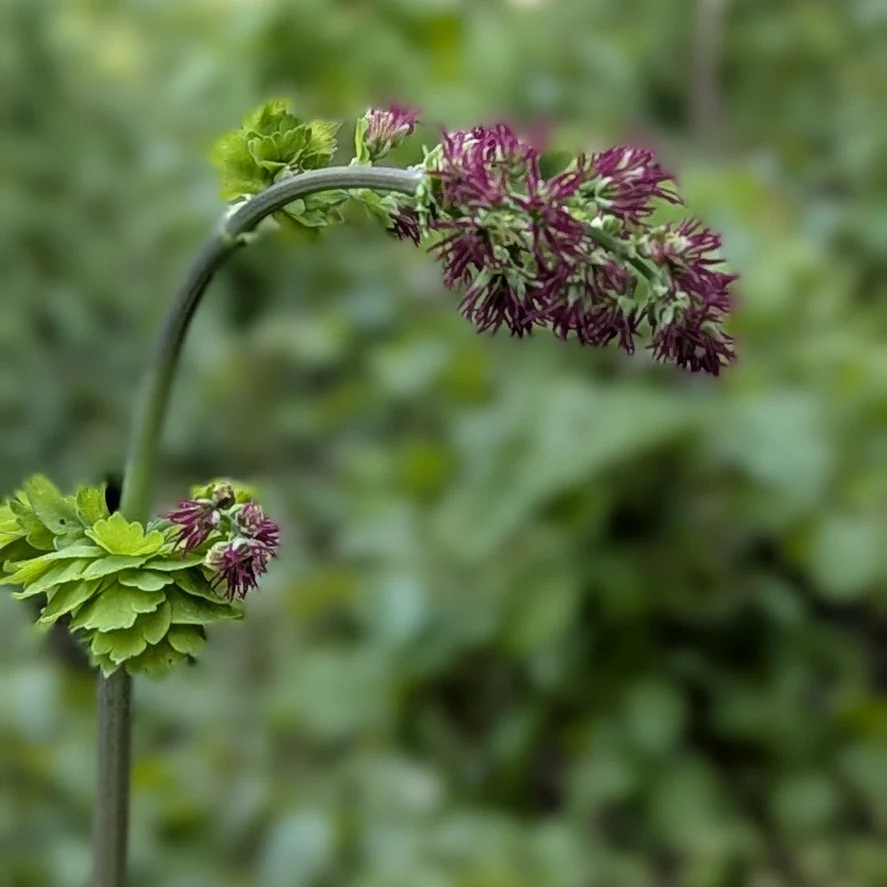
Tall western meadowrue is a graceful, upright perennial that thrives in areas with part-to-full shade and moist soils. Throughout late spring and summer, it sends up elegant stems clad in delicate, lacy blue-green foliage. It is dioecious, meaning the male and female flowers occur on separate plants. Male plants boast broad sprays of yellow-green flowers, with large tassel-like stamen, that dangle magically above the foliage. While female flowers are dense, reddish to light purple clusters. Its abundant, pollen-rich flowers support native bees and other beneficial insects, while its height and fine texture make it a beautiful structural accent in habitat gardens.
- Plant type/canopy layer: deciduous, perennial, herbaceous plant
- Size at maturity: 36-60” tall, 12”-36” wide
- Light requirements: part sun/part shade, full shade
- Moisture requirements: moist to wet soil
- Bloom time: April - June
- Growth rate/ease: fast growing, easy to grow
- Wildlife support: flowers attract and support bees, butterflies and other insect pollinators; it also attracts and supports beneficial insects and is believed to host and be a larval food source for at least five species of native moths
- Native habitat/range: found in mixed evergreen forests, oak woodlands, and along streams in shaded moist forests in California, Oregon, Nevada and Utah. Portland Plant List - not listed, but Oregon Flora Project shows records of it along the Tualatin River outside of Lake Oswego from the 1880's - so it probably should be listed.
- Special features & uses: supports hummingbirds; pollinator favorite; drought resistant once established; landscape uses include shady raingardens and bioswales, woodland gardens
Gardening with Tall Western Meadowrue: Try this stunner in areas that are part-to-full shade with moist soil such as a shady raingarden or a woodland garden. If your soil is on the drier side, irrigate deeply but infrequently (i.e. every 10 days) during the first 2-3 summers and use mulch to help retain moisture. It is quite drought-tolerant once established, but some supplemental summer water will keep it looking lusher, longer. In a habitat garden, use its tall, airy structure as a vertical accent behind lower perennials, plant it in drifts near ponds or swales, or weave it through native grasses to create a layered, meadow-like effect.
Companion Plants: Try it under the canopy of trees and shrubs such as vine maple (Acer circinatum) or red elderberry (Sambucus racemosa var. arborescens), with herbaceous friends like red columbine (Aquilegia formosa), alumroot/coral bells (i.e. Heuchera chlorantha), sword fern (Polystichum munitum) and wild ginger (Asarum caudatum).
Photo Credit 1 (female flowers): © Felicia Gershberg, some rights reserved (CC-BY)
Photo Credits 2, 3, 5, 6, 8 (buds close, budding stalks, male flower stalks, seed pods, in fall): © Gail A Baker, some rights reserved (CC-BY)
Photo Credit 4 (maleflowersclose): © Dee Shea Himes, some rights reserved (CC-BY)
Photo Credit 7 (wild population): © Ed Alverson, some rights reserved (CC-BY)
Original: $9.95
-70%$9.95
$2.98Product Information
Product Information
Shipping & Returns
Shipping & Returns
Description
*PACKAGING NOTE: This lil plant is part of an exciting trial series using CowPots! CowPots are the only biodegradable pot made from 100% renewable and recycled cow manure. CowPots are 100% plastic & peat free, made on an American dairy farm using solar energy, and can be planted right in the ground.
Thalictrum polycarpum
Tall western meadowrue is a graceful, upright perennial that thrives in areas with part-to-full shade and moist soils. Throughout late spring and summer, it sends up elegant stems clad in delicate, lacy blue-green foliage. It is dioecious, meaning the male and female flowers occur on separate plants. Male plants boast broad sprays of yellow-green flowers, with large tassel-like stamen, that dangle magically above the foliage. While female flowers are dense, reddish to light purple clusters. Its abundant, pollen-rich flowers support native bees and other beneficial insects, while its height and fine texture make it a beautiful structural accent in habitat gardens.
- Plant type/canopy layer: deciduous, perennial, herbaceous plant
- Size at maturity: 36-60” tall, 12”-36” wide
- Light requirements: part sun/part shade, full shade
- Moisture requirements: moist to wet soil
- Bloom time: April - June
- Growth rate/ease: fast growing, easy to grow
- Wildlife support: flowers attract and support bees, butterflies and other insect pollinators; it also attracts and supports beneficial insects and is believed to host and be a larval food source for at least five species of native moths
- Native habitat/range: found in mixed evergreen forests, oak woodlands, and along streams in shaded moist forests in California, Oregon, Nevada and Utah. Portland Plant List - not listed, but Oregon Flora Project shows records of it along the Tualatin River outside of Lake Oswego from the 1880's - so it probably should be listed.
- Special features & uses: supports hummingbirds; pollinator favorite; drought resistant once established; landscape uses include shady raingardens and bioswales, woodland gardens
Gardening with Tall Western Meadowrue: Try this stunner in areas that are part-to-full shade with moist soil such as a shady raingarden or a woodland garden. If your soil is on the drier side, irrigate deeply but infrequently (i.e. every 10 days) during the first 2-3 summers and use mulch to help retain moisture. It is quite drought-tolerant once established, but some supplemental summer water will keep it looking lusher, longer. In a habitat garden, use its tall, airy structure as a vertical accent behind lower perennials, plant it in drifts near ponds or swales, or weave it through native grasses to create a layered, meadow-like effect.
Companion Plants: Try it under the canopy of trees and shrubs such as vine maple (Acer circinatum) or red elderberry (Sambucus racemosa var. arborescens), with herbaceous friends like red columbine (Aquilegia formosa), alumroot/coral bells (i.e. Heuchera chlorantha), sword fern (Polystichum munitum) and wild ginger (Asarum caudatum).
Photo Credit 1 (female flowers): © Felicia Gershberg, some rights reserved (CC-BY)
Photo Credits 2, 3, 5, 6, 8 (buds close, budding stalks, male flower stalks, seed pods, in fall): © Gail A Baker, some rights reserved (CC-BY)
Photo Credit 4 (maleflowersclose): © Dee Shea Himes, some rights reserved (CC-BY)
Photo Credit 7 (wild population): © Ed Alverson, some rights reserved (CC-BY)